




Can Character Home Architects Refresh Your Heritage Home?
Buying a Home, Renovations, ServicesCharacter Homes – Can An Architect Refresh Them?
Can character home focused architects refresh my home? Or am I better off cutting my losses and selling?
Should I buy a character home? Or should I opt for something more modern?

Clayfield Character Home Renovation
These are all questions I am FREQUENTLY asked an as architect!
Sadly, as with many things in life, there isn’t a one size fits all answer.
Character homes can be stunning homes!
They can be an insightful window into Brisbane’s architectural history!
In other cases, they can be a regrettable purchase with numerous issues.
Excessive maintenance requirements, stringent council regulations, and the aftermath of dodgy renovation jobs are all issues I have seen owners of these homes have to deal with.
As an architect with 30+ years of experience in the Brisbane area, I have seen more character homes than I can count!
I’ve seen all the positives these homes offer, as well as all the problems they can have.
Over the years I have also met many people who own these homes.
I have met people who wished they never purchased their character home, and I have met people who would never want to live in anything else.
Having trouble deciding if a character home is right for you?
Here is my take on the issue.
Negative – Strict Council Regulations
Ok so hear me out – I actually don’t hate these council regulations!
They ensure that Brisbane’s unique architecture doesn’t disappear, and guarantee that future generations will be able to enjoy it.
They ensure we have a record of Brisbane’s history – a visual reminder of our progression as a city!
Nonetheless, as much as I appreciate the impacts of this regulation, it can at times make development approvals difficult!

This National Trust Home renovation in Auchenflower came with its challenges – however both dion seminara architecture and the client agree that the end result made it worth the effort!
Depending on your intentions for your project, council protections may not be a massive issue.
The clients who I have noticed DO tend to face issues with these regulations typically have some similarities:
They don’t know the home’s protection status
Not all character homes are grand Queenslanders with ornate detailing!
Over the years I have seen many homes which the council has specified as needing to follow the character home rules – even though if I didn’t know better I would think the house was an unlivable ugly demolition job!
I think this is part of the reason there abandoned and run down buildings in expensive suburbs of Brisbane.
A building falling into a state of disrepair doesn’t mean that its protections disappear, so people who purchase these sites with the intention of developing them may find that their project isn’t actually possible!
At the same time – it’s not always clear at first glance whether a building is protected by council regulations. This means that it’s not uncommon for both private buyers and developers to purchase a site without truly understanding its development limitations.
Buildings which look worthy of heritage listing may actually have no protections, and unimportant looking buildings may meet the guidelines for protection.
The following scenario is one I have seen play out many times:
A building is bought by people planning to either demolish it and redevelop the block, or demolish the structure and sell the land.
The land is purchased, a design is commissioned, development applications are lodged – only for the site owner to discover that they cannot demolish the building!
They only THEN realise they need to follow the council heritage guidelines when doing any work on the property.
Another scenario is when a buyer may understand a home’s protection status, but not truly understand the limitations it causes. For example – in some cases it’s not just the home or building which is covered by restrictions, but also other parts of the land it sits on.
Although it’s not a residential property, and it IS one of the more ornate heritage buildings – an example I want to use to emphasise how serious (and complicated) the council building guidelines can be is the Broadway Hotel in Woolloongabba.
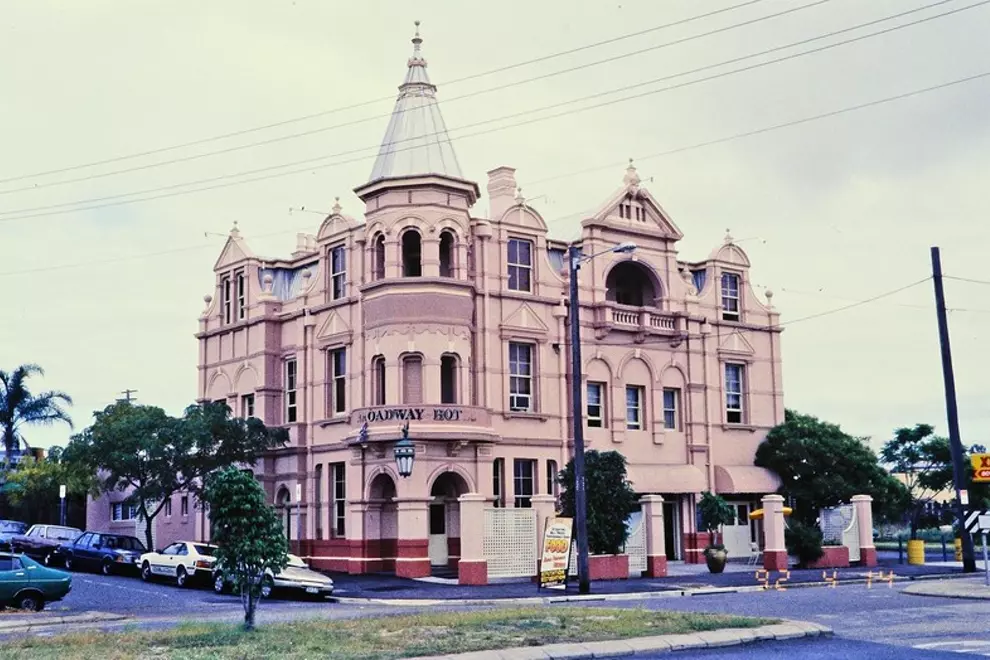
Broadway Hotel, 1992; Queensland Heritage Branch Staff
The Broadway Hotel was protected under State Heritage guidelines which are admittedly a stronger protection than most character homes will have, but the general principles behind these protections remain similar.
The Broadway Hotel suffered a fire in 2010, and was forced to close down.
The land it sat on was in a region zoned as being fine for high rise developments, and the site was purchased by developers.
Although it was clear that there were restrictions on the hotels facade, what wasn’t as clear was the fact that council (or in this case – state) protections can be more complicated than initially thought.
Quickly, the developers learnt the hard way that heritage zoning, and community input, can override all else.
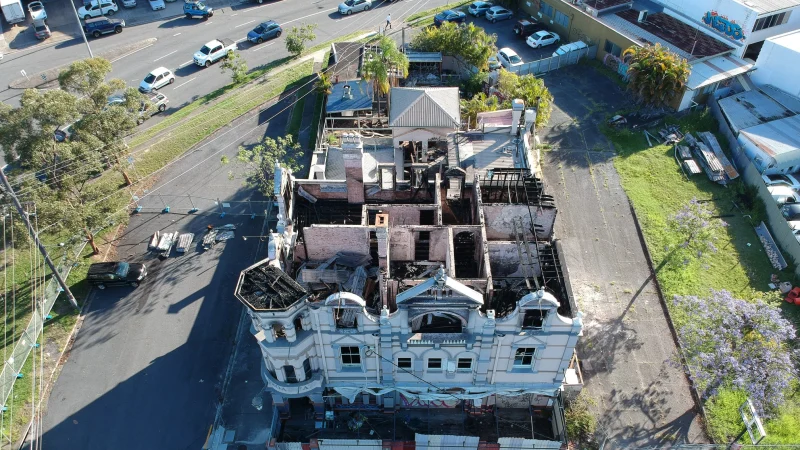
The hotel lay abandoned attracting squatters, graffiti, and several more fires over the years.
Broadway Hotel in 2018
Even when it was in the state of disrepair shown above, heritage protections prevented the building from being demolished, and gave an outline to the way in which any work could be done.
Now, that is an extreme case, and NOT the level of protection offered to most houses.
The reason I mentioned this story, however, is that I frequently see a similar scenario play out on a smaller scale.
How Is This Relevant to Character Homes?
Let me explain!
Whilst the Broadway Hotel is an ornate, heritage building, the relevance to character homes is in the way the scenario played out.
I also like the example because it emphasises the fact that the council rules aren’t as basic as many people think!
Many people believe they don’t need professional help as they have read the regulations, but the reality is that even businesses in the development industry have gotten them wrong!
Over the years I have seen MANY people snap up “bargain” homes with the intention of knocking the house down to build a contemporary replacement.
Unfortunately, I have often had to be the bearer of the bad (but inevitable) news that they NOT ONLY can’t knock the home down, but that under council guidelines they must follow regulations surrounding any renovations’ aesthetic and material choices.

Our Glentworth project was required to obey complex council regulations, and required lots of problem solving.
If you’re reading this article with no first-hand experience in this area – you’re probably thinking that the purchases I’m talking about were caused by negligence on the buyer’s end.
However I’d warn you that this mentality is exactly how people end up in these situations in the first place!
Zoning and regulations can get very complex (even for professionals), and it can be very easy to get confused about what you can and can’t do.
I’m trying to write this article to help people, not just to promote my services, but I have to quickly mention our Pre-Purchase Advice service solely because I have seen the consequences of people not getting professional advice.
Remember – if you’re unsure, speak to a professional!

Trying to save small amounts of time and money in the planning stages rarely pays off in the long run.
My own architecture firm offers a Pre-Purchase Advice service, a service I started to save people from making expensive mistakes.
Pre-Purchase Advice is all about giving you the facts on a property before you take the plunge.
This is where I can give you feedback on your potential site, I can give you my opinion on any issues with the home or site, and I can also make you aware of any issues (like council protections) and the ways in which they could affect what you can do with your purchase!
I also offer a Design Advice Service – a similar offering which is instead intended for homes or sites you already own.
This is an orally presented presentation where we discuss potential design avenues, any design limitations caused by regulations or the nature of the site, and gives you the solid project foundation that comes a projection direction driven by 30+ years of experience!
Anyway, that’s enough of that! Let’s get back to the article, and move on to the MASSIVE positives of character homes now!
Positive – Character Homes Can Be Unique Homes With Premium Builds!
Ultimately, deciding whether character homes are a good or bad purchase can simply come down to your intention.
If you are planning to drastically change the home’s aesthetics, you best seek advice beforehand!
If you are planning to keep the styling and simply modernise the home, and improve its livability – you’re much more likely to be happy with your purchase!
Oftentimes the people that wish they never touched their character property tend to be the ones who hated the home, but loved the price.
These buyers were often planning to buy the land to demolish the existing home and build new. If you fall into this group, I’m going to say it again – get professional advice before making any purchases!
On the other hand, the people I meet who LOVE their character homes are usually the ones who bought the home FOR its quirks and historic appeal. They love the unique styling, and are attracted to the fact that character homes often have a premium build quality.
I must note, that every home is different.
Even if these older homes generally have unique styling and premium builds, this is ultimately a generalisation and will not be true for every example. Even ornate homes which were built to last may have fallen victim to inferior renovations and repairs over the decades.
Even if you choose not to get the opinion of a professional, at minimum you should try your hardest to assess the home’s quality, renovation history, and make an informed decision as to the home’s suitability based on the information you gather.
Spending more time in the research phase will result in a more satisfying outcome!
Character Homes – Unique Designs!
When it comes to unique designs – does it get any more unique than Queenslanders?

This Hawthorne Queenslander renovation combined classic classic Brisbane architecture seamlessly with contemporary styling!
Named after our state, the Queenslander style was designed with the needs of those living in the sunshine state at the front of mind!
Although many Queenslanders have lost their charm and livability over the years (usually as a result of renovations by people who were not experienced in the style), this is where the benefits of commissioning character home architects can come into play!
Queenslanders were originally designed with very open-plan layouts, lots of windows to optimise both natural light and airflow, and deep verandahs. Over the years, the majority of Queenslanders have been renovated in ways which ruined these features.
I commonly see:
- Rooms added in ways which ruin the natural airflow of the homes, turning stunning houses into impractical saunas.
- The deep, wide verandahs closed in to create additional bedrooms with 2 entryways. This is harmful to the home’s functionality, and obscures the features that made Queenslander homes so unique and loved.
- Renovations based around “Quick Fix” solutions. These renovations may have even been done in stages resulting in a home with reduced functionality, a disjointed floor plan, and an overall lack of continuity – the end result being a home which lacks true character!
If you were picturing your own home whilst reading my comments, don’t panic! Whether you choose dion seminara architecture or another firm, a team of architects with experience in Queenslander renovations will be able to bring your home back to its former glory!
Even if you’re after a more contemporary result, with the right architects and clever planning, you can end up with a home that contains the best of both worlds when it comes to both character styling and modern luxuries.

This Redcliffe home refresh added contemporary styling elements to the existing character home.
Another benefit of Queenslander houses specifically is their stylistic synergy with the popular Hamptons style of home. The Queenslander/Hamptons hybrid results in a beautiful home, which combines a historic Brisbane style with an internationally trendy Hamptons look!
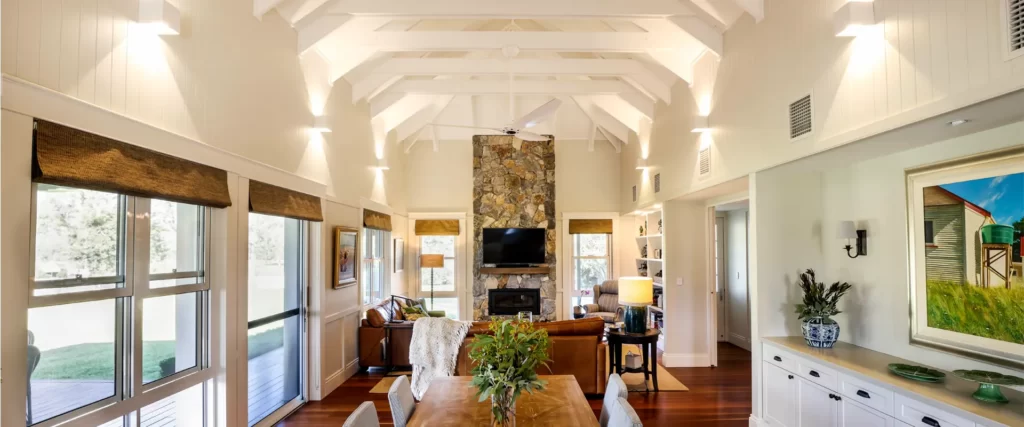
This Gregors Creek project adapted the Hamptons style to suit the Queensland climate!
Character Homes – They don’t build them like they used to!
Whilst “they don’t make them like they used to” is a bit of a cliche – it’s often the truth!
There are many factors that go into this.
For starters, the cost of housing has skyrocketed. This means that many people can’t afford to buy a home as is – let alone one with premium materials and attention to detail. This has naturally led to an increased number of houses being built with cost cutting in mind.
Another key factor is the rate of population growth. The demand for housing is increasing quickly and the supply of housing can’t catch up. Again – this incentivises companies to increase output, often to to the detriment of the end product.
Now – how does this have anything to do with character homes?
Character homes were built in a different time.
They were often built using more solid materials – weatherboard and brick being some examples.
There was less pressure on builders to speed up timeframes and cut corners.
Whilst I did mention that renovations have often caused significant changes to these homes, as long as the “bones” of the house have been properly cared for – you’ll usually find that character homes were built to last!
Should I Commission Character Home Architects, Or Avoid These Homes?
You can probably guess my answer – it depends!
In my opinion, the answer to this question depends on a few key points:
- What are your project goals?
- Are you CERTAIN you understand the home’s protections, and associated limitations?
- Do you have funds available for renovation work, or are you relying on it being suitable in its current state?
As much as I love character homes, and remain a massive fan of their usual build quality, I think that if you’re buying a run down character home solely due to the list price – you’re taking a massive gamble.
Regulatory requirements, uncertainty about the home’s renovation history, and the necessity to blindly trust that the home will be livable year-round (not just the time the agent CHOSE to show you through!!!) are some of the risks faced by people who aren’t prepared.
It is essential to be prepared for the scenario of the home being protected, or needing renovations to make it livable.
On the other hand – if you like the character home style, they can be a great choice!
The key to your satisfaction is, as I have already said, to either have an independent professional attest to the home’s condition/livability, OR have funds available for the scenario that a renovation is necessary.
It’s not all doom and gloom however!
Purchasing and renovating a character home doesn’t need to be a stressful stab in the dark.
The process SHOULDN’T cause more issues than any other home purchase or renovation!
My main takeaway, and the point I really want this article to emphasise, is that character home projects should NOT be undertaken without planning, expert assistance, and due diligence.
Whether you want me to help you with your project, or you choose a different firm experienced in character homes, I need to emphasise that when it comes to character home purchases – trying to save small amounts of time and money in the planning stages can cost you an INCREDIBLE amount more in the long run!
Although I AM an architect – I can promise that this takeaway wasn’t made up to benefit my business interests.
That takeaway is influenced by the number of people who have tried to enlist my help, to fix their problematic purchase decisions, AFTER they have bought the property and realised their mistake.
Prevention is ALWAYS the best cure.
Your home should be a place for family, for relaxation, for entertaining.
Your home should be your happy place.
For the majority of people, your home will be the most expensive purchase you ever make – by a large margin.
Your home will also, for lots of people, be one of the places you spend the most time in.
Whether you choose a character home or not, the key to happiness is choosing the right home for YOU!

DION SEMINARA, DION SEMINARA ARCHITECTURE
We are experts at home design, renovations and new homes and ensure good value for money outcomes.Hi, I am Dion Seminara, practicing architect and licensed general builder for 30 years as well as an environmental sustainable design (ESD) expert. I graduated from Queensland University of Technology (QUT) with honours, QLD in 1989. Registered as an architect in 1991 and registered as a builder in 1992, I am also a fellow member of the Australian Institute of Architects (AIA). Having received 12 ArCHdes Residential Architecture Awards, LJ Hooker Flood Free Home Design Award and the 2016 AIA Regional Commendation for Public Architecture, my expertise with both residential renovation (to all types of houses, especially Queenslanders, 50s/60s/80s), new contemporary homes and luxury residences has earned me a reputation as one of Brisbane's architectural specialists in lifestyle design architecture, interior design and landscape design.
![Post War Home Renovations [Updated November 2023]](https://dsarchitecture.com.au/wp-content/webp-express/webp-images/uploads/2019/02/dkp_DS_BayviewTce35M.jpg.webp)

